Sands Casino Singapore: The Entry Levy Maths Most Locals Don't Run
There is a number that matters more than any game statistic when a Singapore resident walks through the doors of Sands Casino — or decides not to. That number is SGD 150. It is the daily entry levy. The annual pass sits at SGD 3,000. And the arithmetic separating them is precisely why many players who thought they understood the cost of entry never actually ran the numbers.
MBA66, an online entertainment platform founded in 2014 and serving Mandarin-speaking players across Singapore with over 200,000 members, has built its live dealer and slots experience around a different economic model entirely — one with no entry friction, no levy, and no physical infrastructure overhead. Understanding the maths behind land-based casino entry is the clearest way to see why.

Photo by Pavel Danilyuk on Pexels
The Entry Levy: What It Actually Costs
The Gambling Regulatory Authority of Singapore (GRA) requires all Singapore citizens and permanent residents to pay an entry levy before entering either licensed casino — Marina Bay Sands or Resorts World Sentosa. Tourists holding foreign passports are exempt. The levy is not a deposit. It is not applied to a gameplay account. It is a pure cost of admission, paid at the gate via self-service kiosk or staffed counter, with your IC scanned and a receipt issued.
Walk in, play nothing, and leave — you are still down SGD 150.
This is not an accident. Parliament designed the levy as a protective friction mechanism: expensive enough to discourage habitual casual visitation by locals, yet accessible for occasional visits. The daily rate of SGD 150 is the price of a single entry window spanning 24 hours. The annual pass at SGD 3,000 removes that per-visit friction for committed regulars.
The critical question — one most locals don't run before their first visit — is where the crossover point lies.
The Crossover Point: When the Annual Pass Actually Wins
The mathematics is elementary. Divide the annual pass cost by the daily rate:
SGD 3,000 ÷ SGD 150 = 20 visits
This defines the entire crossover calculus:
- Fewer than 20 visits per year: daily passes are cheaper
- Exactly 20 visits per year: both options cost SGD 3,000
- More than 20 visits per year: annual pass delivers net savings
For someone visiting once every three weeks on average, the annual pass breaks even against daily rates. For someone going every couple of months — which covers the majority of casual players — the daily pass is the economically rational choice.
The 20-visit threshold is deceptively high. Twenty visits means showing up almost every other weekend, 52 weeks a year. Most casual players in the 35–55 demographic visit 2 to 6 times annually, placing them firmly in daily-pass territory. The annual pass exists primarily for a more committed segment — a smaller cohort than the casino floor's traffic patterns might suggest.
How Slots and Electronic Gaming Machines Calculate Odds
Before comparing land-based casino economics against an online platform like MBA66, it helps to understand how the games actually determine outcomes — because this is where the second major maths gap exists among regular players.
Modern slot machines and electronic gaming terminals (ETGs) are not mechanical devices. They are computers running certified Random Number Generator (RNG) software. Every spin, every card dealt in a digital blackjack shoe, every Sic Bo result is generated by this software — a cryptographic-grade algorithm that produces numbers at a rate of thousands per second, even when the machine is idle.
When you press the spin button, the RNG freezes on whatever number it is currently generating. That number maps to a specific outcome on the virtual reel or table. The visible animation — the spinning reels, the card flip — is theatre. The result is already decided the moment you initiate the action.
The consequence for player maths is precise: each spin is an independent event. The machine does not "owe" you a win after a losing streak. It does not "cool down" after a jackpot. The RNG has no memory. This is why experienced players distinguish between two metrics that govern every slot session: Return to Player (RTP) and volatility or variance.
RTP is expressed as a percentage. A slot with a 96% RTP returns SGD 96 in prizes for every SGD 100 wagered, on average, across an infinite number of spins. The remaining 4% is the house edge — the platform's mathematical edge built into every game. In Singapore's regulated ETG environment, minimum RTPs are typically mandated above 85–90%, though operator-configured returns can be higher. On MBA66's integrated slots platform, which features titles from providers including Pragmatic Play, JILI, Nextspin, Fa Chai, and Spade Gaming alongside legacy fruit machine brands, RTPs are published per game and accessible within each title's information panel.
Volatility describes the distribution pattern of those returns. A low-volatility slot pays small amounts frequently. A high-volatility slot pays large jackpots rarely. A player on a SGD 5 per-spin high-volatility machine faces dramatically different bankroll dynamics than one on a SGD 0.10 low-volatility title — even if both carry the same stated RTP of 96%.

Photo by Pavel Danilyuk on Pexels
Sands Casino Table Games: The House Edge in Practice
Back on the Sands Casino floor, table games present their own mathematical structures — and the levy cost adds a layer that doesn't exist online.
At a standard American roulette wheel, the house edge is 5.26% — derived from the two green zero pockets (0 and 00) that create 38 total outcomes. Every SGD 100 wagered on red/black or odd/even returns, on average, SGD 94.74 to players over time. The remaining SGD 5.26 is the mathematical house take. On a Baccarat table betting on the Player hand, the house edge sits around 1.24%; on the Banker hand, after the standard 5% commission, it is approximately 1.06%.
These numbers are the baseline. Actual session outcomes deviate wildly from mathematical expectation in the short run — that is the nature of variance. A player who sits down with SGD 1,000 and bets SGD 50 per hand on Baccarat might walk out up SGD 800 or down SGD 1,000 within an hour. The house edge only converges to its expected value across tens of thousands of hands.
What the levy does — and this is the piece most players underestimate — is shift the effective break-even point. When a Singapore citizen factors SGD 150 into every trip cost, the effective RTP of every game on the floor drops. A SGD 50-per-hand Baccarat session where the player wagers SGD 2,000 across 40 hands faces the same 1.06% house edge as always, but the SGD 150 levy adds SGD 7.50 in pure cost on top. That is additional expected loss with no corresponding upside.
On MBA66's live dealer platform, which streams real-time Baccarat, Dragon/Tiger, Sic Bo, and Roulette from Evolution and other licensed Asian studios with professionally trained dealers, there is no entry cost. The mathematical edge applies only to actual wagers placed — not to the act of accessing the game.

Photo by Pavel Danilyuk on Pexels
Bankroll Management: The Maths Locals Don't Run
The most consequential number in any gambling session is not the RTP, the table minimum, or the levy rate. It is the ratio between your total bankroll and your average bet size — and how many betting units that produces before variance either runs hot or cold.
Professional and semi-professional players apply a simple rule: a session should contain enough betting units to survive normal statistical fluctuation without going bust. For a player with a SGD 2,000 bankroll betting SGD 50 per hand, that is 40 units. For a player with the same bankroll betting SGD 200 per hand, it is 10 units — a sample size too small for the law of large numbers to express itself, meaning outcomes are dominated by luck rather than the mathematical edge.
The levy amplifies this problem. A player who visits Sands Casino four times a year, paying SGD 150 per visit, has committed SGD 600 in entry costs before placing a single bet. That SGD 600 is deducted from effective bankroll — money that could have supported more betting units across more sessions on a platform with no entry barrier.
For the experienced player in the 35–55 demographic who values payment speed, withdrawal timeliness, and responsive support — the three factors most cited by long-tenured online casino users — the comparison is straightforward. A licensed online platform like MBA66, operating under permits from the Isle of Man and Kahnawake, Canada, eliminates the levy entirely. Deposits and withdrawals process through online banking channels with full transaction logging. The 24/7 support team, available in Chinese and English, handles disputes, KYC verification, and withdrawal queries around the clock.
FAQ
How does the SGD 150 daily levy at Sands Casino compare to online casino costs?
The SGD 150 daily entry levy applies to every visit by Singapore citizens and PRs and is non-refundable regardless of how long you stay or whether you place any bets. Online platforms like MBA66 charge no entry levy — the cost of playing is limited to your actual wagers and the house edge embedded in each game. There is no admission charge, no annual pass requirement, and no friction at the door.
Are online casino games fair?
All games on platforms like MBA66 use certified Random Number Generator (RNG) technology, which determines card dealing, spin outcomes, and Sic Bo results independently of any external input. RNG outcomes are statistically random and subject to regulatory requirements under the platform's licensing jurisdictions. The RNG software in each game is what ensures equal chances for players and the platform on every single event.
What is the minimum deposit to start playing on MBA66?
MBA66 supports multiple deposit methods through online banking. Specific minimum deposit amounts, applicable fees, and processing times are listed on the Banking page. For the most current information or assistance with payment issues, the 24/7 Live Chat team is available around the clock.
How long does a withdrawal take on MBA66?
Withdrawal processing depends on online banking availability and transaction volume. Standard amounts are prioritized, and larger withdrawals may require additional verification time. All transactions are fully logged in the platform's transaction database, providing a complete record for dispute resolution if needed.
Does MBA66 require KYC verification?
To comply with anti-money-laundering regulations and protect member funds, MBA66 requires that the bank account holder's name matches the registered account name exactly. Registration details must be truthful, complete, and accurate. The platform reserves the right to suspend accounts where registration information cannot be verified.
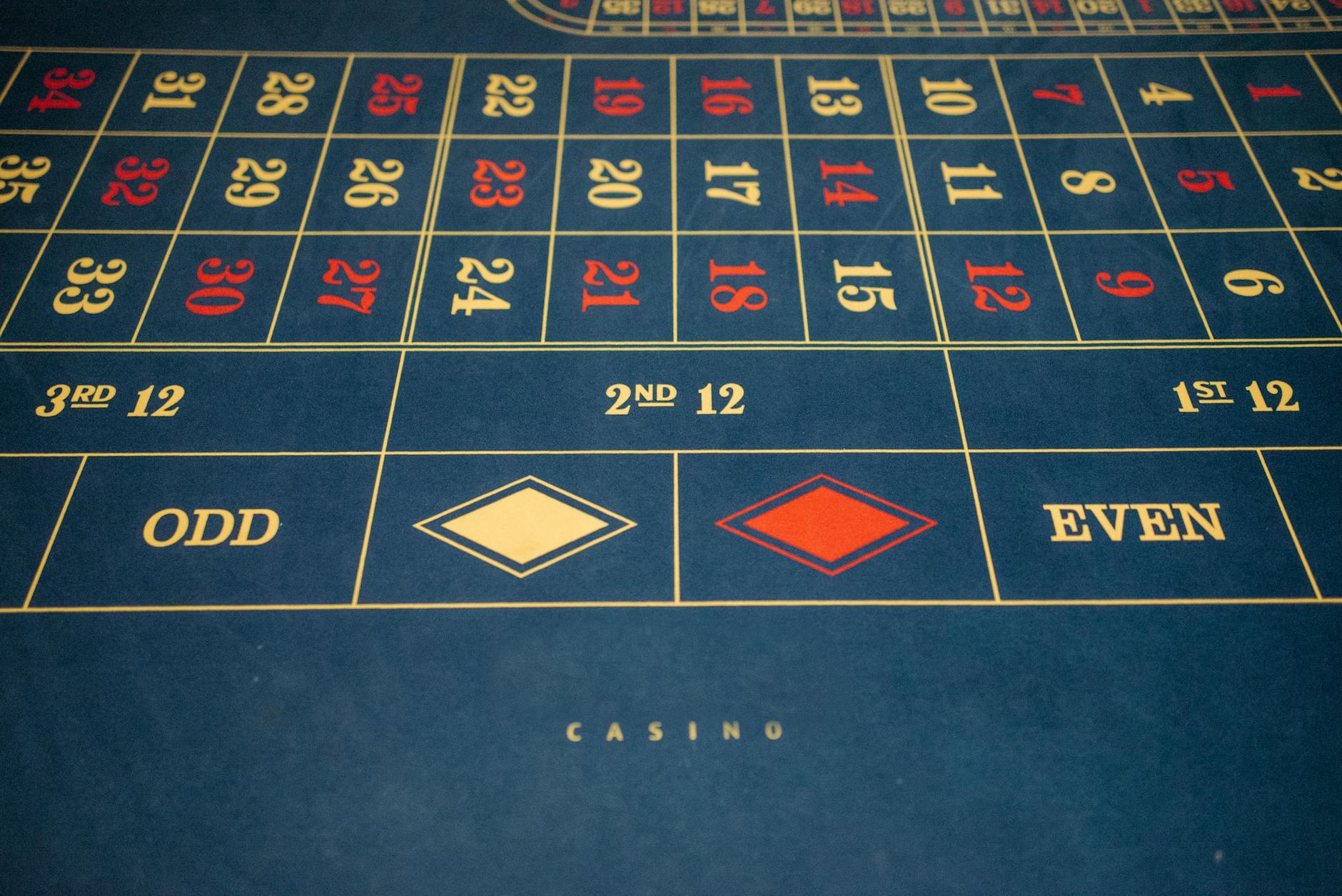
Photo by Pavel Danilyuk on Pexels
For the player who has sat at the Sands Casino floor, paid the levy, watched the cards fall, and done the maths on what the house edge actually costs across a year of sessions — the comparison with an online platform is worth running carefully. The entry levy alone, compounded over a handful of annual visits, is a significant and underappreciated drag on bankroll. On a licensed online platform with published RTPs, live dealer transparency, and no admission cost, those same dollars stretch further across more hands, more spins, and more actual play time.
The maths is not complicated. The only step left is running it.